Mind the gap 2024 - USA
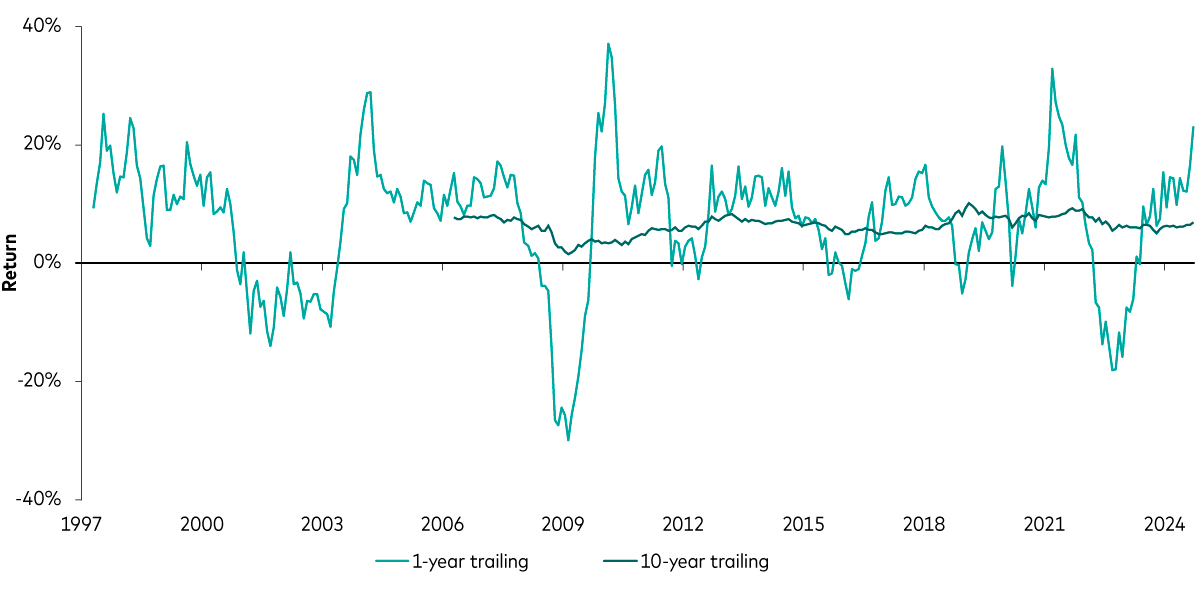
We estimate that the average dollar invested in US mutual funds and exchange-traded funds earned 6.3% per year over the 10 years ended Dec. 31, 2023. That is approximately 1.1% per year less than the average fund's total return over the same period assuming an initial lump-sum purchase. The 1.1% "gap" is explained by the timing of investors' purchases and sales of fund shares.
Mind the Gap 2023 – Investor Returns Around the World
Key Takeaways
➡️ The past five years were marked by the coronavirus pandemic, the Russia-Ukraine War, and steep rises in central bank rates. Investors had trouble staying the course and missed a meaningful share of funds' returns.
➡️ All six domiciles studied show a negative investor return gap over the 2018-23 period, meaning that investors' timing of entries and exits detracted value compared with a hypothetical buy-and-hold
investment.
➡️ Fund investors in Australia and the United Kingdom suffered the smallest losses due to unfavorable timing. These markets are characterized by more holistic financial advice than the other markets included in the study, where funds are sold often as isolated products.
➡️ Worst gaps were found in the cross-border markets of Ireland and Luxembourg, while in Hong Kong, investors suffered from negative absolute returns as Chinese markets went through tough times.
➡️ Across asset classes, the most volatile categories and the most volatile funds within each Morningstar Category typically caused investors to lose more of their returns to timing of inflows and outflows.
➡️ Compared with active equity strategies, equity index funds and exchange-traded funds seemed generally easier for investors to handle. Investor return gaps were narrower in index products compared with their active counterparts.
➡️ The study reinforces the idea that investors perform best when sticking to simpler and less volatile products rather than following trends and chasing short-term performance.